
Selecting the right Conversion Rate Optimization (CRO) agency determines whether your existing traffic converts into measurable revenue or remains underutilized. CRO is not guesswork—it is a structured, data-driven process. The correct agency accelerates growth; the wrong one wastes time, budget, and opportunities.
This guide provides a step-by-step, elimination-based framework to choose the best CRO agency with accuracy.
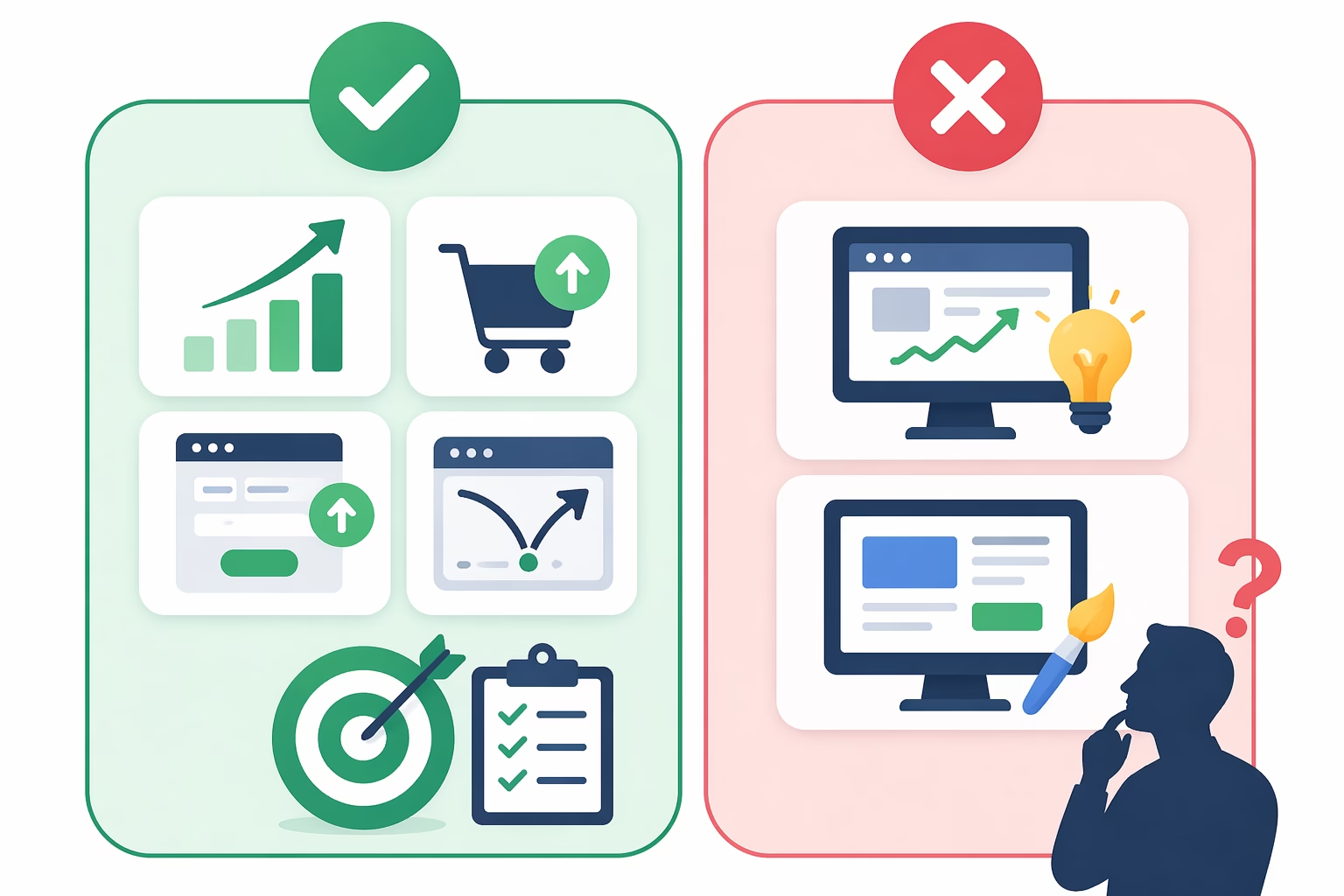
1. Define Clear Conversion Goals (Mandatory Step)
Before evaluating any agency, establish measurable objectives.
Valid Goals
- Increase conversion rate from 1.5% → 3% in 3–6 months
- Improve checkout completion rate by 25%
- Increase lead form submissions by 40%
- Reduce bounce rate below 40%
2. Understand Your Conversion Funnel
A CRO agency must optimize your full funnel, not just pages.
Typical Funnel
- Landing page
- Product/service page
- Checkout / lead form
- Confirmation
Requirement
Identify where users drop off:
- High traffic + low conversions → CRO needed
- Low traffic → SEO required first
3. Step-by-Step Selection Framework
Step 1: Evaluate Data-Driven Approach
A professional CRO agency must rely on:
- Analytics (Google Analytics, GA4)
- Heatmaps (Hotjar, Crazy Egg)
- Session recordings
- Funnel tracking
Reject if:
- Decisions based on assumptions
- No data analysis process
Step 2: Check Testing Capability (Core Requirement)
CRO depends on experimentation.
Required capabilities:
- A/B testing
- Multivariate testing
- Hypothesis creation
Reject if:
- No structured testing process
- “We redesign website without testing”
.
Step 3: Review Case Studies (Proof of Results)
Ask for:
- Before vs after conversion rates
- Traffic vs conversion improvement
- Revenue impact
Reject if:
- Only traffic growth shown (SEO metric)
- No conversion-focused data
Step 4: Evaluate UX/UI Expertise
CRO is strongly linked with user experience.
Agency must demonstrate:
- Landing page design optimization
- Mobile responsiveness
- CTA placement strategy
- Page layout improvements
Step 5: Analyze Tools and Technology
Professional agencies use:
- Google Analytics
- Google Optimize / VWO
- Hotjar / Crazy Egg
- GTmetrix / PageSpeed Insights
Reject if:
- No mention of tools
- Reliance on manual guesswork
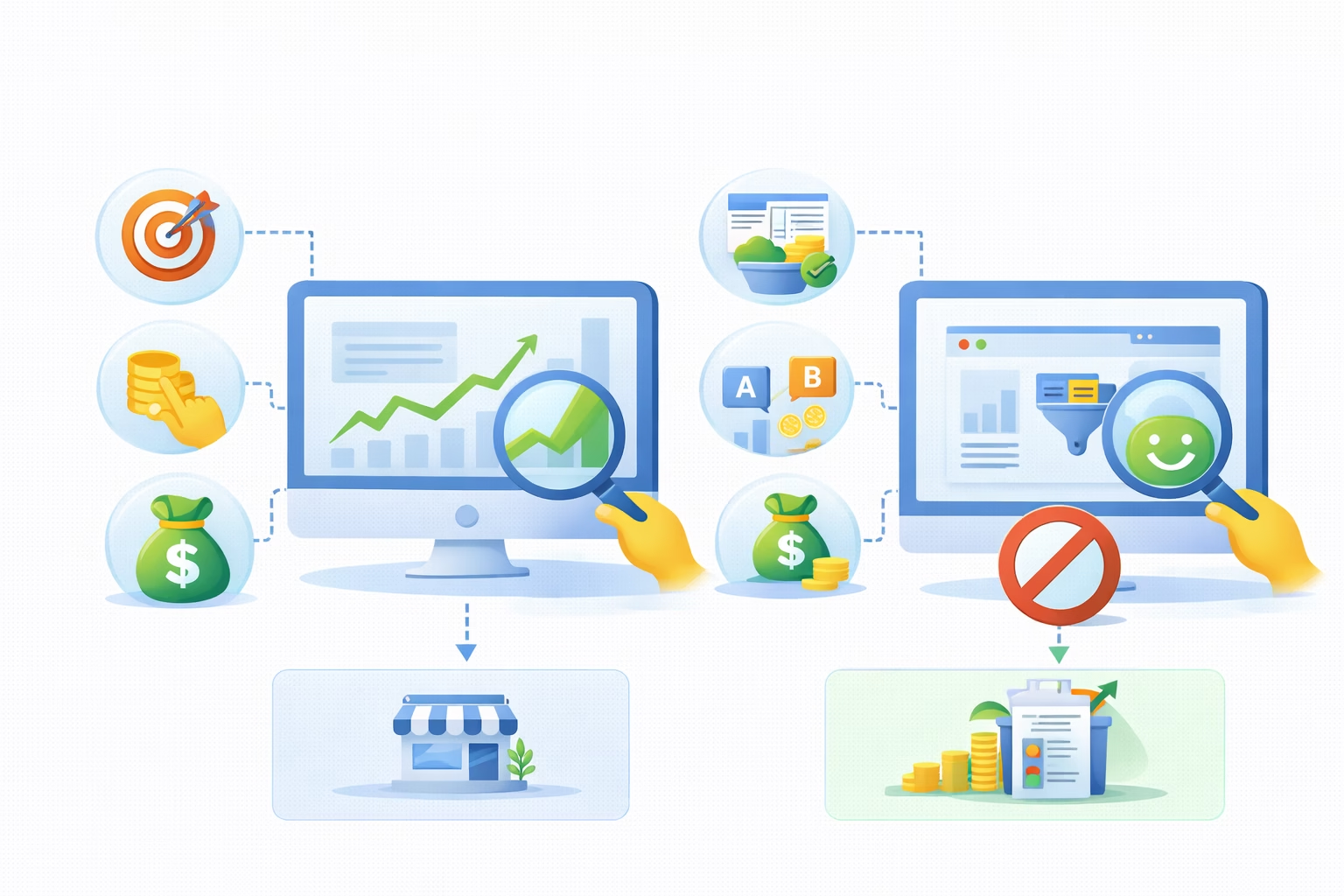
Step 6: Check Conversion Tracking Setup
Without tracking, CRO is invalid.
Ensure agency can:
- Set up conversion goals
- Track events (clicks, forms, purchases)
- Measure ROI
Step 7: Assess Reporting Transparency
Reports must include:
- Conversion rate changes
- Test results (A/B outcomes)
- Revenue impact
- Funnel performance
Reject if:
- Only traffic metrics shown
- No test data provided
Step 7: Assess Reporting Transparency
Reports must include:
- Conversion rate changes
- Test results (A/B outcomes)
- Revenue impact
- Funnel performance
Reject if:
- Only traffic metrics shown
- No test data provided
Step 8: Evaluate Communication and Process
CRO requires collaboration.
Check:
- Frequency of updates
- Clarity of communication
- Dedicated account manager
4. CRO Pricing Models (Reality-Based)
Monthly Retainer
- ₹25,000 – ₹2,00,000+
- Continuous testing and optimization
Best for: Growth-focused businesses
Project-Based CRO
- ₹30,000 – ₹3,00,000
- One-time audit or landing page optimization
Best for: Initial improvements
Performance-Based CRO
- Pay based on conversion improvement
Risk: Requires strict
validation
Pricing Rule
Very low-cost CRO → likely no real testing or data-driven work
5. Red Flags (Immediate Rejection Criteria)
If any condition is true → eliminate agency.
- Guarantees conversion increase without testing
- No A/B testing process
- No analytics or tracking setup
- Focus only on design, not data
- No case studies
- No reporting structure
- Promises instant results
6. Questions to Ask Before Hiring
Use these to filter strictly:
- How do you identify conversion problems?
- What is your A/B testing process?
- Can you show measurable CRO results?
- What tools do you use?
- How do you track conversions?
- How long before results are visible?
Reject if answers lack clarity or specifics.
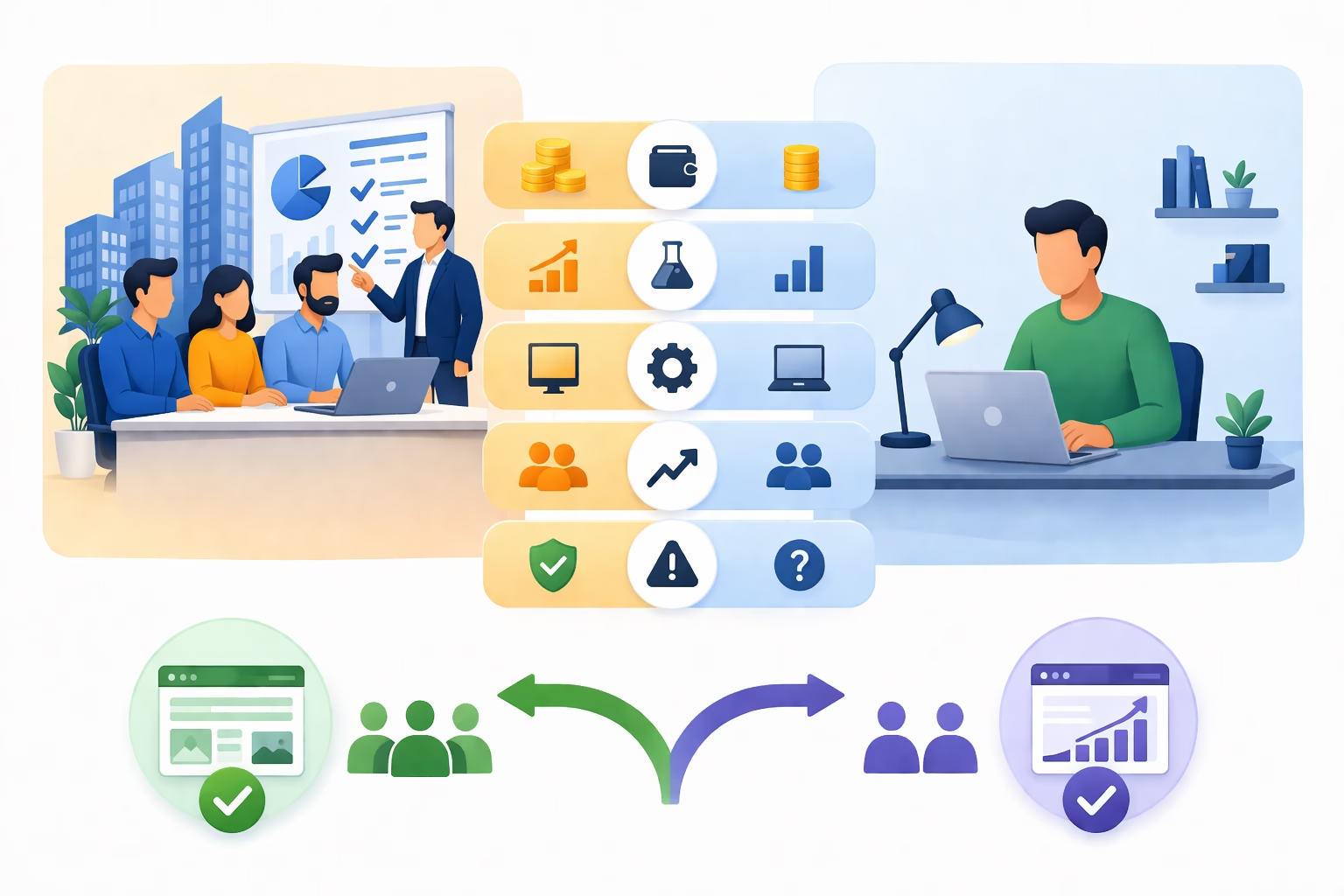
7. Agency vs Freelancer (CRO Context)
| Factor | Agency | Freelancer |
|---|---|---|
| Cost | Higher | Lower |
| Testing capability | Advanced | Limited |
| Tools | Full access | Limited |
| Scalability | High | Medium |
| Risk | Lower | Depends |
8. CRO Timeline (Realistic Expectations)
- Month 1 → Data collection + audit
- Month 2 → Initial tests
- Month 3–4 → Measurable improvements
- Month 5+ → Scaled results
Reject agencies promising instant conversion boosts.
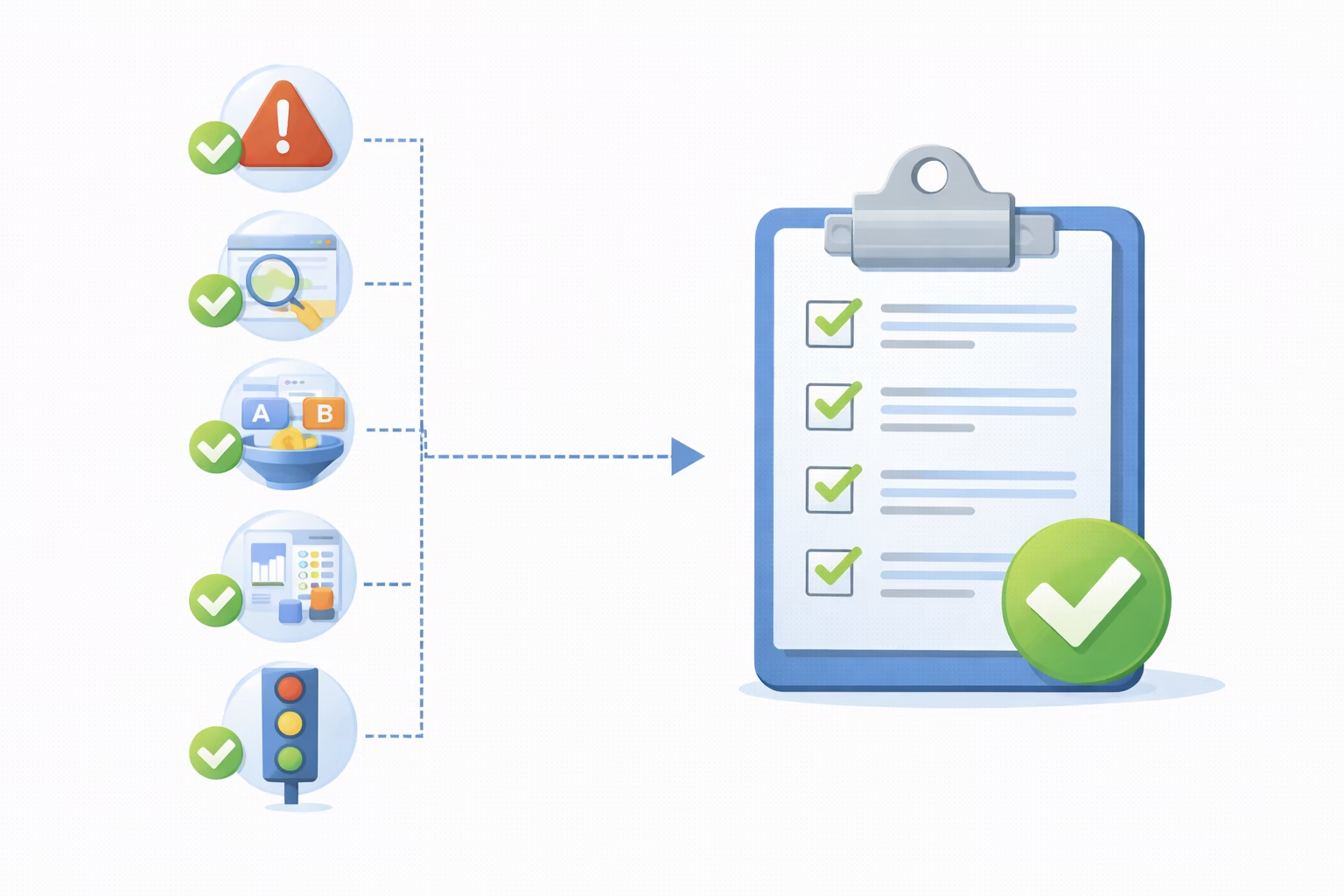
9. Deliverables Checklist (Before Finalizing)
Ensure the contract includes:
- CRO audit report
- Testing roadmap
- A/B testing plan
- UX improvement strategy
- Reporting frequency
10. Common Mistakes to Avoid
- Choosing based on price only
- Ignoring data-driven approach
- Not verifying case studies
- Expecting immediate results
- Not tracking conversions
11. Key Insight (Critical)
CRO success depends on:
- Data accuracy
- Testing consistency
- User experience improvements
Not on:
- Design alone
- Assumptions
- One-time changes
12. Final Decision Framework
Follow strict elimination:
- Remove agencies with red flags
- Verify data-driven approach
- Check testing capability
- Evaluate case studies
- Compare pricing vs value
- Conduct final discussion
Select only if all conditions are satisfied.
Conclusion
Choosing the best CRO agency is a structured process based on data, testing, and proven results. The right agency increases conversions, improves ROI, and maximizes the value of your existing traffic.
The wrong agency leads to inaccurate decisions, wasted budget, and no measurable improvement.



Add comment