
eCommerce growth is not driven by traffic alone. In 2026, profitability depends on how efficiently a store attracts qualified visitors, converts them into buyers, and retains them for repeat purchases. Shopify provides a scalable infrastructure for online stores, but without a structured marketing system, most stores fail to reach consistent revenue growth.
This guide explains how Shopify marketing increases online sales through a disciplined, data-driven approach.
What Is Shopify Marketing?
Shopify marketing refers to all strategies used to promote, optimize, and scale a store built on Shopify.
Core Objectives
- Increase qualified traffic
- Improve conversion rates
- Boost average order value (AOV)
- Maximize customer lifetime value (CLV)
Key Channels
- SEO
- Paid advertising
- Social media
- Email marketing
- Retargeting
What Is Shopify Marketing?
Shopify marketing refers to all strategies used to promote, optimize, and scale a store built on Shopify.
Core Objectives
- Increase qualified traffic
- Improve conversion rates
- Boost average order value (AOV)
- Maximize customer lifetime value (CLV)
Key Channels
- SEO
- Paid advertising
- Social media
- Email marketing
- Retargeting
Why Shopify Marketing Is Critical
1. High Competition
Thousands of Shopify stores compete for attention. Differentiation requires structured execution.
2. Rising Advertising Costs
Without optimization, ad spend reduces profitability.
3. Conversion Dependency
Traffic without conversion produces zero revenue.
4. Retention Importance
Repeat customers significantly increase profit margins.
.
Core Shopify Marketing Strategies
1. Shopify SEO (Organic Growth)
SEO drives long-term, cost-effective traffic.
Key Areas
- Product page optimization
- Category page structure
- Technical SEO (site speed, indexing)
- Keyword targeting
Benefits
- Sustainable traffic
- Reduced ad dependency
- Higher trust
2. Paid Advertising Strategy
Paid ads provide immediate visibility.
Platforms
- Google Ads
- Facebook Ads
- Instagram Ads
Ad Types
- Search ads
- Shopping ads
- Retargeting ads
Objective
Drive high-intent users to product pages.
3. Conversion Rate Optimization (CRO)
Improving conversion rate directly increases revenue without increasing traffic.
Key Elements
- High-quality product images
- Clear product descriptions
- Fast checkout process
- Trust signals (reviews, guarantees)
Impact Example
- Traffic: 10,000 visitors
- Conversion: 1% → 2%
- Sales double without extra traffic
4. Email Marketing & Automation
Email is one of the highest ROI channels.
Essential Campaigns
- Abandoned cart recovery
- Welcome sequence
- Post-purchase upsell
- Re-engagement emails
Benefit
Low cost, high conversion potential.
5. Social Media Marketing
Social media drives awareness and discovery.
Key Platforms
- YouTube
Strategy
- Short-form videos
- Influencer collaborations
- Paid campaigns
6. Retargeting Strategy
Most users do not buy on the first visit.
Solution
Retarget users using:
- Display ads
- Social ads
- Email reminders
Result
Higher conversion rates at lower cost.
Step-by-Step Shopify Marketing System
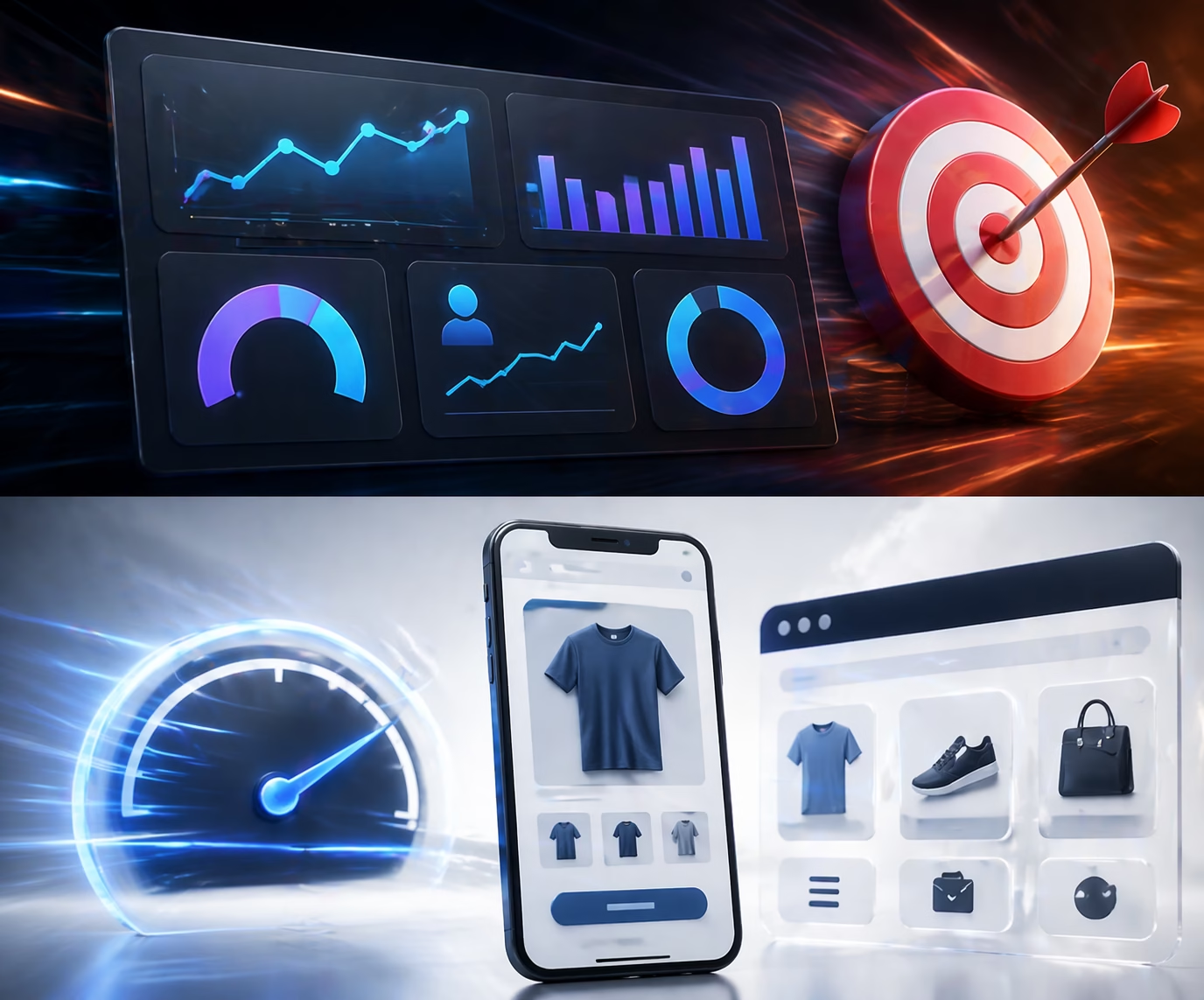
Step 1: Define Key Metrics
Track:
- Conversion rate
- AOV (Average Order Value)
- CLV (Customer Lifetime Value)
- ROAS (Return on Ad Spend)
Step 2: Optimize Store Foundation
Ensure:
- Mobile-first design
- Fast loading speed (<3 seconds)
Step 3: Implement SEO Strategy
Target:
- Product keywords
- Long-tail keywords
- Category-level queries
Step 4: Launch Paid Campaigns
Use Google Ads and social ads for immediate traffic.
Step 5: Improve Product Pages
Focus on:
- Visual appeal
- Persuasive copy
- Customer reviews
Step 6: Build Retention System
Use:
- Email automation
- Loyalty programs
- Personalized offers
Step 7: Analyze and Optimize
Use tools like Google Analytics.
Monitor
- Traffic
- Conversion rate
- Revenue
- Customer behavior
Key Metrics for Shopify Growth
| Metric | Purpose |
|---|---|
| Conversion Rate | Sales efficiency |
| AOV | Revenue per order |
| CLV | Long-term value |
| ROAS | Ad profitability |
| Cart Abandonment Rate | Funnel performance |
Advanced Shopify Marketing Strategies (2026)
1. AI-Powered Personalization
Recommend products based on user behavior.
2. First-Party Data Strategy
Use customer data for better targeting.
3. Omnichannel Marketing
Consistent experience across platforms.
4. Video Commerce
Short-form videos increase engagement and conversions.
Realistic Growth Timeline
- Month 1–2: Setup and optimization
- Month 3–4: Initial traction
- Month 5–6: Growth phase
- Month 6+: Scaling
.
Future of Shopify Marketing
- Increased automation
- AI-driven campaigns
- Personalized shopping experiences
- Greater focus on UX
SEO vs Paid Ads for Shopify
| Factor | SEO | Paid Ads |
|---|---|---|
| Speed | Slow | Fast |
| Cost | Low long-term | Continuous |
| Sustainability | High | Medium |
| Scalability | Medium | High |
.
Cost of Shopify Marketing (India)
| Service | Cost Range |
|---|---|
| SEO | ₹15,000 – ₹50,000 |
| Paid Ads | ₹20,000 – ₹1,50,000+ |
| Social Media | ₹10,000 – ₹40,000 |
| Email Marketing | ₹5,000 – ₹20,000 |
Conclusion
Shopify marketing is a structured system, not a single activity.
Businesses that focus on:
- SEO for sustainable traffic
- Paid ads for immediate results
- CRO for higher conversions
- Email for retention
achieve consistent and scalable sales growth.
Core Principle:
Attract → Convert → Retain → Scale
Online success depends on optimizing every stage of the customer journey, not just generating traffic.



Add comment