
For small and mid-sized businesses, return on investment (ROI) is the primary metric that determines marketing success. Paid advertising often receives criticism for high costs, but when executed correctly, Google Ads becomes a controlled, measurable, and scalable revenue engine.
This guide explains a structured, step-by-step strategy to maximize ROI using Google Ads. Each step is based on performance principles, not assumptions.
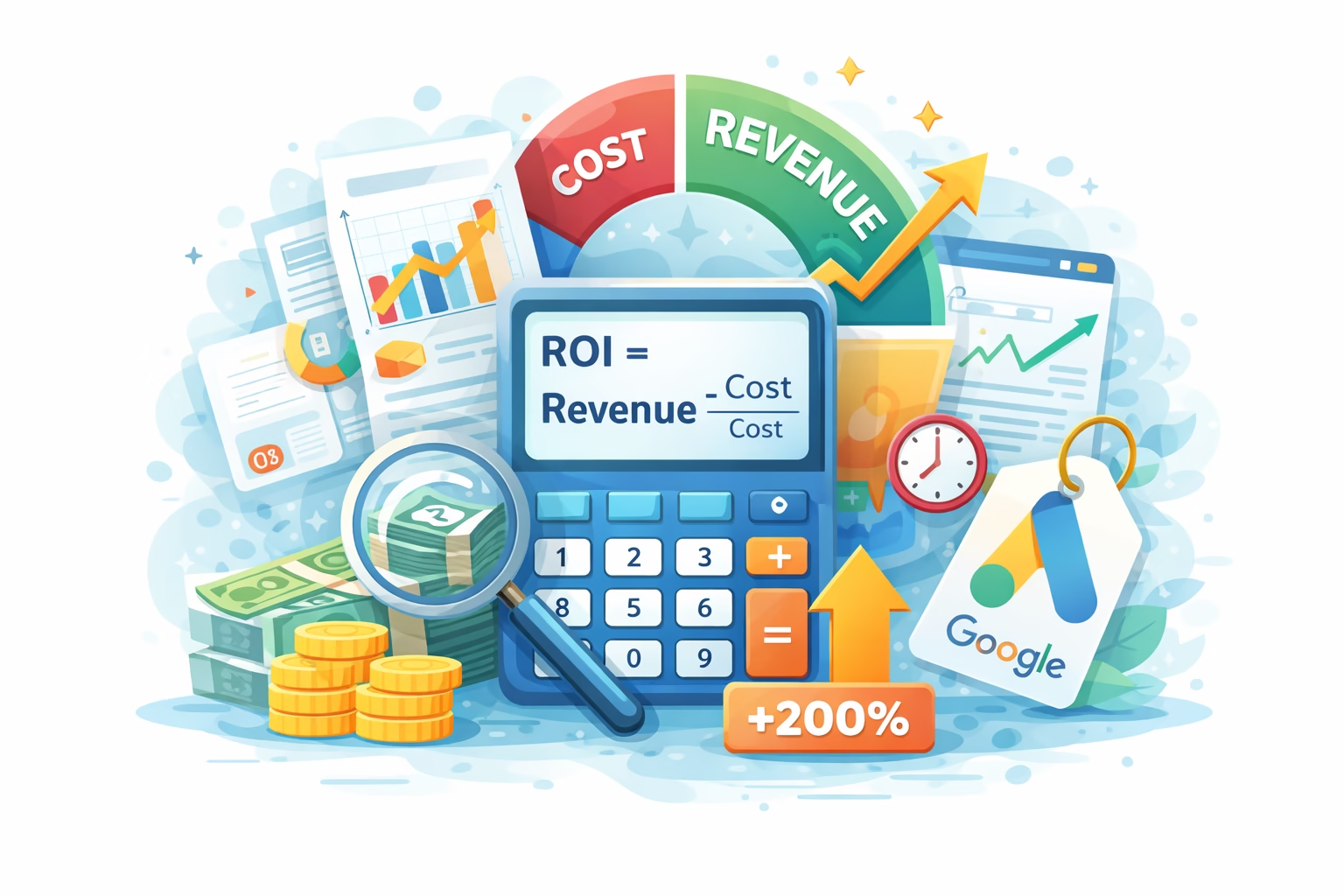
What Is ROI in Google Ads?
ROI (Return on Investment) measures the profitability of your campaigns.
Formula:
ROI=Revenue−CostCost×100ROI = \frac{Revenue – Cost}{Cost} \times 100ROI=CostRevenue−Cost×100
Example:
- Ad Spend = ₹10,000
- Revenue Generated = ₹30,000
ROI = 200%
Objective: Increase revenue while controlling or reducing cost per acquisition (CPA).
Why Google Ads Works for ROI
1. High-Intent Traffic
Users searching on Google already want a solution. Ads capture this demand instantly.
2. Measurable Performance
Every click, impression, and conversion is tracked.
3. Budget Control
You decide:
- Daily budget
- Bid amount
- Target audience
4. Fast Results
Unlike SEO, results can begin within hours
Step-by-Step Strategy to Maximize ROI
Step 1: Define Clear Conversion Goals
Without a defined goal, ROI cannot be measured.
Common Conversion Goals:
- Lead form submission
- Phone calls
- Product purchases
- App installs
Action:
Set up conversion tracking using:
- Google Analytics
- Google Ads conversion tracking
Rule: No tracking = No optimization.
Step 2: Perform High-Intent Keyword Research
Not all keywords generate profit.
Focus on:
- Transactional keywords
- Buyer-intent queries
Examples:
- “buy running shoes online”
- “hire digital marketing agency”
Avoid:
- Broad informational keywords (low ROI)
Step 3: Use Structured Campaign Setup
Poor structure reduces control and increases wasted spend.
Recommended Structure:
- Campaign → based on objective
- Ad groups → tightly themed keywords
- Ads → highly relevant to keywords
Example:
Campaign: SEO Services
- Ad Group 1: Local SEO
- Ad Group 2: Technical SEO
Step 4: Write High-Converting Ads
Your ad determines whether a user clicks or ignores.
Key Elements:
- Strong headline (include keyword)
- Clear value proposition
- Call-to-action (CTA)
Example:
- “Get 3X More Leads with Expert SEO Services”
- “Free Audit – Limited Offer”
Tip:
Use emotional + logical triggers:
- Save time
- Increase revenue
- Reduce cost
Step 5: Optimize Landing Pages
Sending traffic to a weak page destroys ROI.
Must-Have Elements:
- Fast loading speed (<3 seconds)
- Mobile-friendly design
- Clear headline
- Single CTA
- Trust signals (reviews, testimonials)
Common Mistake:
Sending ads to homepage instead of a targeted landing page.
Step 6: Implement Smart Bidding Strategies
Google Ads offers automated bidding to improve ROI.
Key Strategies:
- Target CPA (Cost Per Acquisition)
- Target ROAS (Return on Ad Spend)
- Maximize conversions
When to Use:
- After collecting enough data (minimum 30–50 conversions)
Step 7: Use Negative Keywords
Negative keywords prevent wasted spend.
Example:
If you sell premium services:
- Add “free”, “cheap”, “download” as negative keywords
Result:
- Higher quality traffic
- Lower cost per click (CPC)
- Better ROI
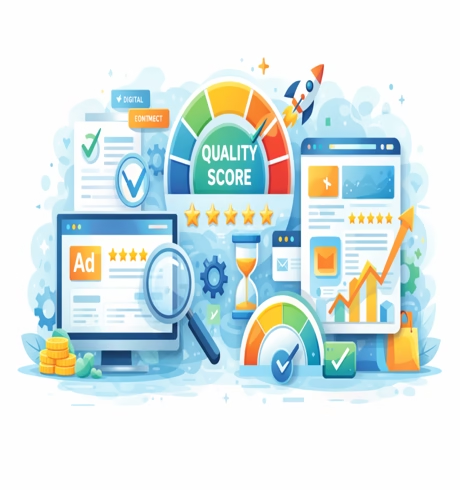
Step 8: Focus on Quality Score
Quality Score directly impacts:
- Cost per click
- Ad rank
Components:
- Ad relevance
- Expected CTR (click-through rate)
- Landing page experience
Improvement Strategy:
- Match keywords with ad copy
- Improve page speed
- Increase engagement
Step 9: A/B Testing (Critical for Growth)
Testing is mandatory for ROI improvement.
Test Variables:
- Headlines
- CTA
- Landing page design
- Ad extensions
Rule:
Never assume. Always test.
Step 10: Use Audience Targeting
Refine who sees your ads.
Options:
- Location targeting
- Device targeting
- Demographics
- Custom audiences
Advanced Strategy:
Remarketing (target users who already visited your website)
Step 11: Monitor Key Metrics
Track only what impacts ROI.
Core Metrics:
| Metric | Meaning |
|---|---|
| CTR | Ad effectiveness |
| CPC | Cost per click |
| CPA | Cost per conversion |
| Conversion Rate | Efficiency |
| ROAS | Revenue performance |
Step 12: Scale What Works
Once profitable:
- Increase budget gradually
- Expand keyword list
- Test new audiences
Common Mistakes That Kill ROI
- No conversion tracking
- Targeting broad keywords
- Ignoring negative keywords
- Poor landing page
- No testing
- Stopping campaigns too early

Advanced Strategies for 2026
1. AI-Powered Optimization
Google Ads uses machine learning to improve targeting and bidding.
2. Performance Max Campaigns
Automated campaigns across:
- Search
- Display
- YouTube
- Gmail
3. First-Party Data Usage
Using your own customer data improves targeting accuracy.
Realistic ROI Timeline
- Week 1–2: Data collection
- Week 3–4: Initial optimization
- Month 2–3: ROI improvement
- Month 3+: Scaling phase
Immediate high ROI is rare without testing.
Google Ads vs SEO (ROI Perspective)
| Factor | Google Ads | SEO |
|---|---|---|
| Speed | Fast | Slow |
| Cost | Paid | Organic |
| Control | High | Medium |
| Sustainability | Low (needs budget) | High |
Final Conclusion
Google Ads is not expensive; inefficient campaigns are.
When executed with:
- Proper tracking
- High-intent keywords
- Optimized landing pages
- Continuous testing
…it becomes a predictable and scalable ROI machine.
Core Principle:
- Measure everything
- Optimize continuously
- Scale only what works
Businesses that follow this structured approach consistently achieve higher conversions, lower costs, and sustainable growth.
.



Add comment